A D2C brand owns its storefront, its customer data, and its margins. It also owns every leak along the path from a stranger’s first click to a loyal customer’s fifth order. That path is the D2C marketing funnel, and understanding it is the difference between spending on ads and building a business.
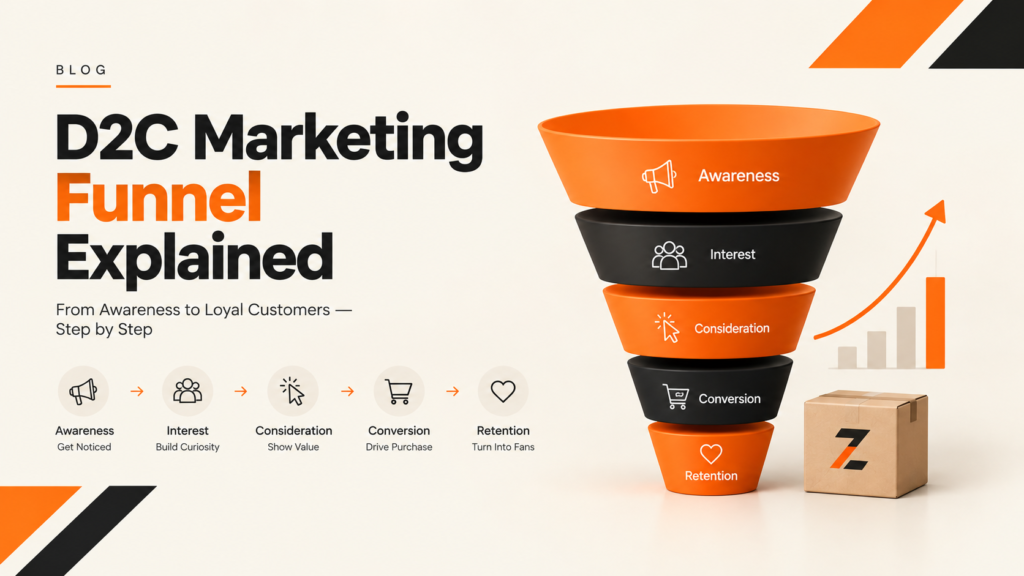
A D2C marketing funnel is the journey a shopper takes with a direct-to-consumer brand, from first discovering it to buying and then coming back. It usually has five stages: awareness, consideration, conversion, retention and advocacy. Each stage needs its own content, channel and metric.
This guide is for website builders, ecommerce businesses, students and business owners who want a clear, practical view of how the funnel works.
Key takeaways
- The D2C funnel does not end at purchase. Retention is where most of the profit sits.
- Each stage has one job and one number to watch.
- Fix the leakiest stage first instead of pouring more traffic into the top.
- AI SEO tools speed up research, but strategy still needs a human.
Why the D2C Marketing Funnel Matters
Marketplaces hand you traffic but keep the customer relationship. With a D2C model, nobody stands between you and your buyer, so nobody else will fix your conversion problems either. If visitors arrive and leave, you pay for the same attention again tomorrow.
A funnel gives you a map. Instead of asking “why are sales low?”, you ask a sharper question: do people not find us, not trust us, or not finish checkout? Each answer points to a different fix.
Stage 1: Awareness
At the top, people do not know you exist. Your goal is to be found by the right people, not everyone.
Search, social content, short video, influencer collaborations and paid social all work here. Search deserves special attention because it brings people who are already looking for something. Blog posts, category pages, and helpful guides that target problem-based queries build a steady stream of visitors without paying per click.
The number to watch is qualified traffic: visitors who view more than one page, not just those who land and bounce.
Stage 2: Consideration
Now the shopper knows you exist and is comparing you with alternatives. They are asking whether your product is worth it and whether your brand can be trusted.
This is where product pages, reviews, comparison content, FAQs, user photos and founder stories earn their keep. Detailed product descriptions that answer real objections, such as sizing, ingredients, delivery time and returns, do more work than a clever tagline.
Pro tip: Read your customer support chats and product reviews. The questions people keep asking are your best content topics and your best product page fixes.
The number to watch is engagement: time on product pages, add-to-cart rate and email sign-ups.
Stage 3: Conversion
This is the stage everyone obsesses over, but it only works if the first two are healthy. Conversion is about removing friction: a fast mobile site, clear pricing, visible delivery estimates, cash on delivery or UPI options for Indian shoppers, and a checkout with as few steps as possible.
Retargeting ads and abandoned-cart emails or WhatsApp messages recover shoppers who nearly bought. A limited offer can help, but a confusing checkout will undo any discount.
The number to watch is conversion rate, along with cart abandonment rate.
Stage 4: Retention
Acquiring a new customer usually costs more than keeping an existing one, which is why the best D2C brands treat the first purchase as the beginning.
Post-purchase email flows, replenishment reminders, loyalty rewards, subscriptions and genuinely useful follow-up content bring buyers back. A skincare brand might send usage tips a week after delivery. A home decor brand might suggest matching products a month later.
The numbers to watch are repeat purchase rate and customer lifetime value.
Stage 5: Advocacy
Happy customers become your cheapest marketing channel. Ask for reviews at the right moment, encourage photo submissions, run referral programs and feature customer stories on your site. Every review you collect also feeds back into Stage 2, so the funnel becomes a loop instead of a line.
Using AI SEO Tools Across the Funnel
AI SEO tools are useful for the repetitive parts of funnel work. They can cluster keywords by buying stage, surface content gaps against competitors, suggest page structures, flag technical issues and speed up first drafts of product descriptions.
What they cannot do is understand your customer. A tool can tell you that a keyword has volume. It cannot tell you whether the person searching it is ready to buy or just curious. Use AI to move faster, then edit with real knowledge of your audience and brand voice.
When to Work With a D2C Marketing Agency
Many founders start by running everything themselves, and that is a sensible way to learn. The trouble comes when ads, content, email and analytics all need attention at once.
A D2C marketing agency brings channel experience, tested workflows and a view across multiple brands. A performance marketing agency focuses on measurable results: cost per acquisition, return on ad spend and revenue attributed to each campaign. When choosing a partner, ask how they will report on each funnel stage, not just on clicks.
For local businesses, working with a team that offers digital marketing services in Jaipur has practical advantages: familiarity with regional buyer behaviour, language preferences and local festive demand cycles.
Frequently Asked Questions
What is a D2C marketing funnel?
A D2C marketing funnel is the path a customer takes with a direct-to-consumer brand, from discovering it through buying, repeat purchasing and recommending it to others. It helps brands decide where to focus content, ads and website improvements at each stage.
How is a D2C funnel different from a regular sales funnel?
A D2C funnel stays focused on the customer after the sale. Because the brand owns the relationship, retention and advocacy are core stages, not afterthoughts. Brands also collect first-party data that guides every later campaign.
Which funnel stage should a new brand focus on first?
Start with the stage where you lose the most people. If traffic is low, work on awareness. If people visit but never buy, fix consideration and conversion. Measure before spending more.
Do small businesses need a full funnel?
Yes, but it can be simple. A blog, a well-built product page, an email list and a follow-up message already cover the basics of all five stages.
Conclusion
The D2C marketing funnel is not a complicated theory. It is a way of seeing your customer’s journey clearly so you can fix the weakest point and grow with confidence. Build awareness with useful content, earn trust during consideration, remove friction at checkout, and invest in retention and advocacy so every customer is worth more over time.
Want a funnel built around your brand? Primexcale, a D2C and digital marketing agency in Jaipur, helps brands plan, launch and improve funnels across SEO, content, social media and paid ads. Get in touch with our team to discuss where your funnel is leaking and how to fix it.